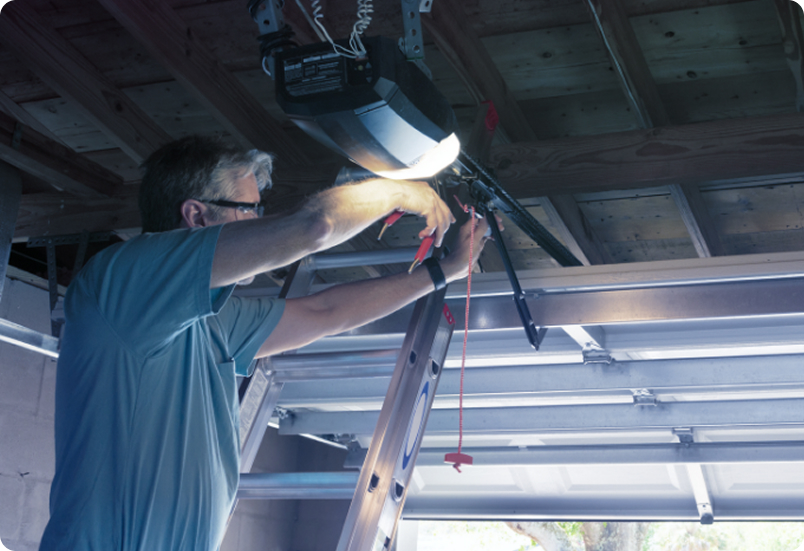

The Risks of DIY Garage Door Spring Replacement
Garage door springs support and balance a heavy moving door. This safety guide explains why damaged or broken springs should be assessed and replaced by trained technicians—not handled as a home repair.
Garage Door Safety
Why spring replacement is not a DIY repair
Garage door springs form part of the counterbalance system that helps control the door’s weight. Whether the door uses torsion springs, extension springs or an internal roller-door spring assembly, the system can store substantial mechanical energy.
If a spring, cable, bracket or winding component is loosened or handled incorrectly, that energy can be released suddenly. The door or nearby hardware may move without warning and cause serious injury or further damage.
Do not loosen, cut, stretch, clamp, unwind or remove garage-door spring hardware. Keep clear of the door and arrange a professional assessment.

Spring Systems
Different springs present different hazards
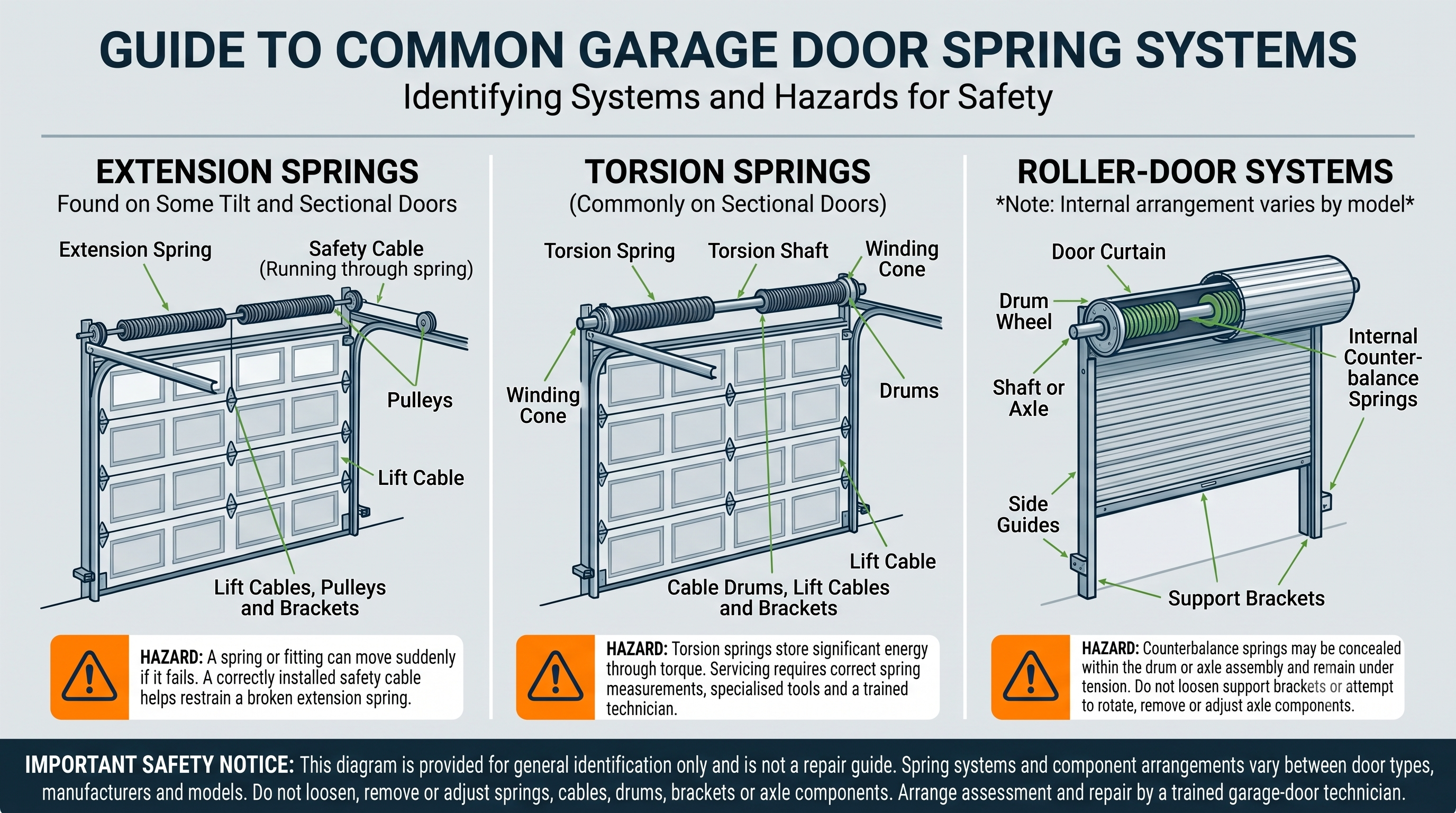
Garage-door spring arrangements vary between door types, manufacturers and models. Common systems include:
- Extension springs: used on some tilt and older sectional-door systems. A damaged spring, hook or related fitting can move unexpectedly when the system is under tension.
- Torsion springs: commonly mounted on a shaft above the opening. These springs store rotational force and require the correct tools, measurements and procedures.
- Roller-door spring assemblies: often located inside the drum or axle. Their position does not make them safe to dismantle.
- Cables, drums and brackets: these work with the spring system and may also be under significant load.
Identifying the spring type can help when requesting service, but it should not be used as a repair guide.
Broken Spring Warning Signs
What a failed spring can look or sound like
A garage-door spring problem may be obvious, or it may first appear as a change in how the door operates. Warning signs can include:
- A loud bang from the garage.
- The door suddenly feeling much heavier than usual.
- The opener running while the door lifts only slightly or does not move.
- A visible gap in a torsion spring.
- The door lifting unevenly or sitting crooked.
- Loose, frayed or displaced cables.
- Unusual movement, jerking or loss of balance.
If you notice any of these signs, stop operating the door. Do not repeatedly press the remote or try to force the door open.

What To Do Next
Keep the area safe and arrange an assessment
When a spring may be damaged or broken, focus on keeping people and property safe:
- Stop using the remote, wall button and manual release.
- Keep children, pets and vehicles away from the door.
- Do not stand or work beneath a partly open or unstable door.
- Do not touch loose cables, brackets, drums or spring components.
- From a safe position, note the door type, opener model and visible symptoms.
- Take photos only if this can be done without approaching or standing under the door.
Contact AGG Doors for a professional garage door spring replacement assessment across Melbourne. If the door is stuck open or creating an immediate security concern, call the emergency line on (03) 8789 3222.

Garage Door Spring Safety
Frequently Asked Questions
These answers explain common warning signs and safe next steps. They are not instructions for adjusting, removing or replacing a garage-door spring.
Broken garage-door spring? Keep clear and call AGG Doors.
Our team can arrange professional garage-door spring replacement across Melbourne. Do not attempt to operate, adjust or dismantle the spring system while waiting for help.